What probably happened
You cooked your chicken to 165°F internal temperature, following standard food safety advice. The problem is that 165°F is the instant-kill temperature for bacteria, not the temperature at which chicken is best to eat.
Why it happened
Chicken breast is lean muscle with very little fat or connective tissue. At 165°F, the muscle fibers have contracted so much they squeeze out most of their moisture. The USDA recommends 165°F because it kills salmonella instantly. But pasteurization is a function of temperature AND time — holding chicken at 155°F for about 50 seconds achieves the same safety with much less moisture loss.
How to save it now
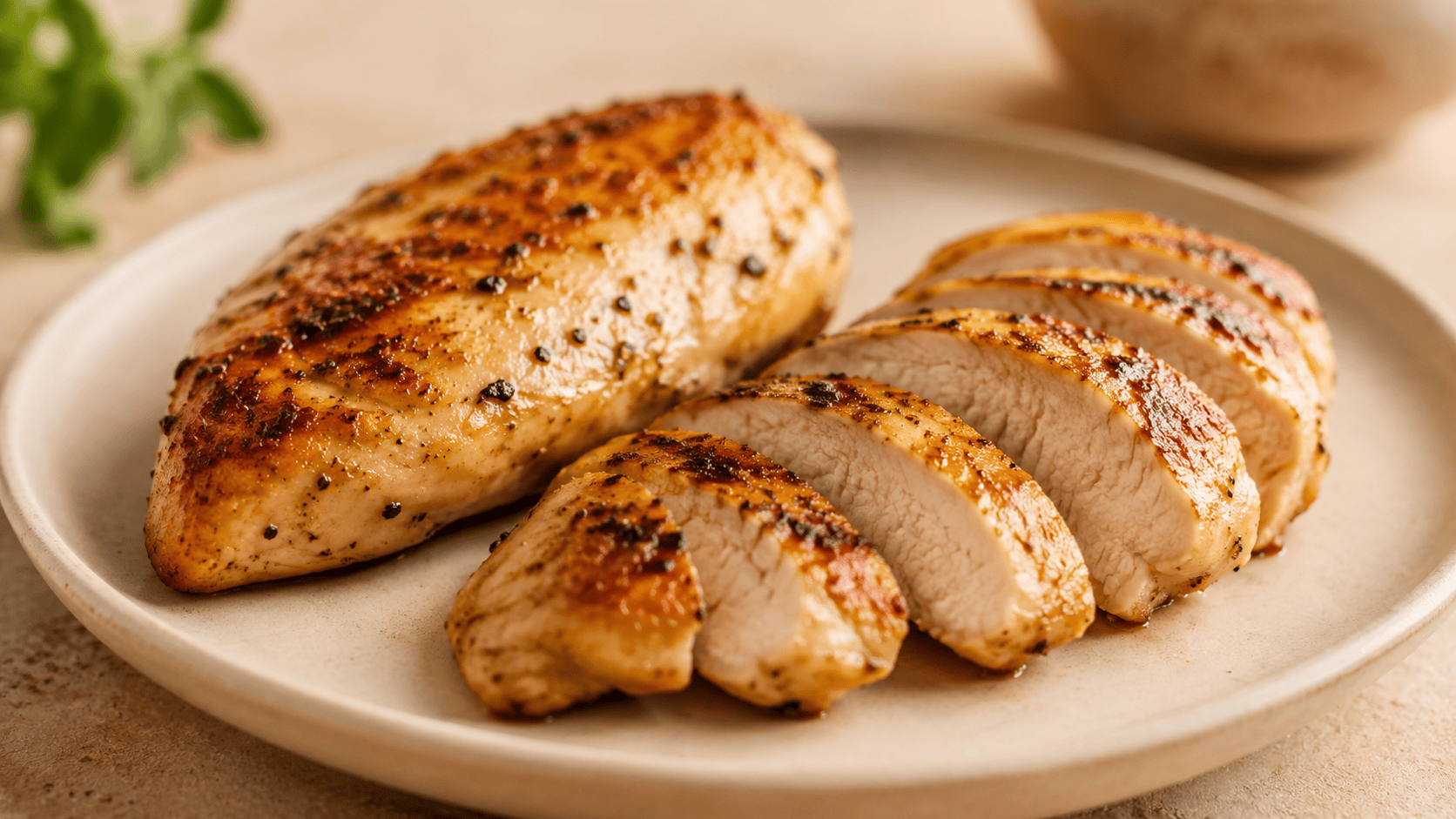
If the chicken is already cooked and dry, slice it thin against the grain and serve it with a sauce or broth. The thin slices create more surface area for the sauce to cling to, and slicing against the grain shortens the muscle fibers so each bite feels more tender.
How to prevent it next time
Pull chicken breast at 155°F internal temperature and let it rest for 5 minutes. The carryover heat will bring it to about 160°F, and the rest time is long enough for pasteurization. Use an instant-read thermometer — guessing by feel or color is the number one cause of overcooked chicken.
Tiny kitchen test
Next time you cook two chicken breasts, pull one at 155°F and the other at 165°F. Let both rest 5 minutes. Cut them side by side. The 155°F breast will glisten with moisture. The 165°F breast will look dry and stringy. Same chicken, same pan, different result.
Still not working? Ask us on Instagram and we'll dig into it.