Principle Lab
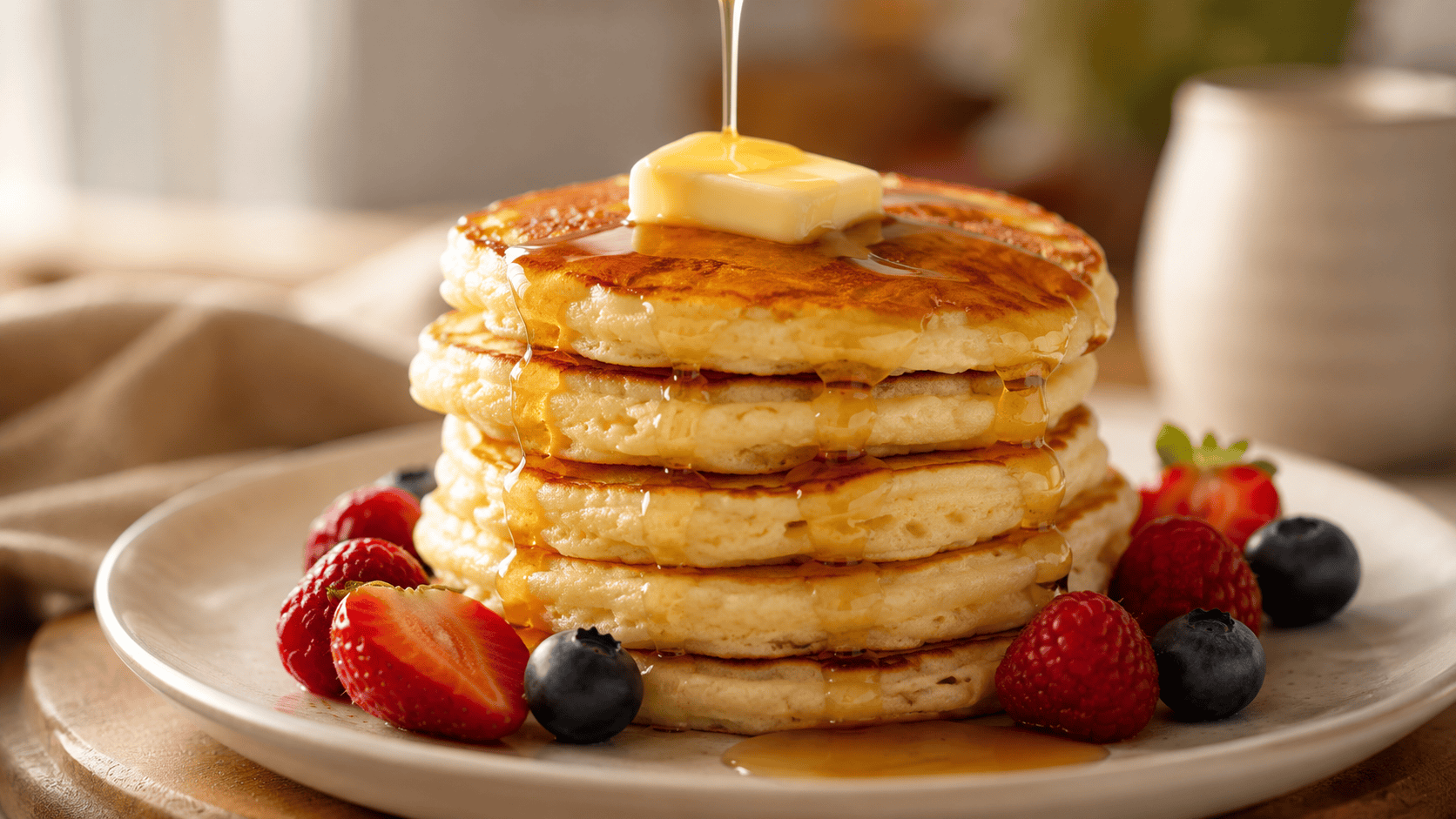
Lumpy-Batter Pancakes
Jump to Recipe ↓The Principle
Flour + water + stirring = gluten. Gluten gives bread its chew and pancakes their toughness. Mix just until the dry disappears. Lumps dissolve during cooking.
What You Need
Structure
- 1 cup all-purpose flour
- 1 tbsp sugar
Leavening
- 1 tsp baking powder
- 1/4 tsp baking soda
The Wet
- 3/4 cup buttermilk (the acid activates the soda)
- 1 large egg
- 2 tbsp melted butter
Flavor Support
- 1 tsp vanilla extract
- Butter for the griddle
Method
-
Whisk dry ingredients together: flour, sugar, baking powder, baking soda.
-
In a separate bowl, whisk buttermilk, egg, and melted butter.
-
Pour wet into dry. Mix with a fork for 10 to 15 seconds. Stop while the batter is still very lumpy.
WhyEvery stir develops more gluten. 10 to 15 seconds is enough to combine. Lumps are flour pockets that haven't been overworked. They dissolve during cooking. Smooth batter means you built a gluten network strong enough for a bagel.
-
Rest the batter for 5 minutes. Do not stir again.
WhyResting hydrates the flour fully and dissolves the lumps naturally. You don't need to stir them out. Time handles it. Stirring again would undo the rest and develop more gluten.
-
Ladle 1/4 cup batter onto a hot buttered griddle over medium heat. Look for bubbles forming on top and edges that look set. Flip once.
WhyMedium heat gives the baking powder time to produce its second rise. Too hot and the outside burns before the inside sets. Flip once to maintain structure.
What Can Go Wrong
Tough, chewy pancakes?
You overmixed. Too much gluten developed.
Stop at 10 to 15 seconds while the batter is still lumpy.
Flat pancakes?
Baking powder may be old, or the batter sat too long before cooking.
Replace baking powder every 6 months. Cook immediately after resting.
Metallic taste?
Baking soda without enough acid. Buttermilk is the acid in this recipe.
Don't substitute regular milk without adjusting the leavening.
The Science Behind This Recipe
Cook This Next
You stirred your pancake batter until it was perfectly smooth. No lumps. No streaks. The kind of batter that looks like it belongs in a cooking show.
Then your pancakes came out dense and chewy. Not light. Not fluffy. You could practically bounce one off the counter.
The problem wasn’t your recipe. It wasn’t your griddle. You overmixed. And those lumps you were trying to eliminate were doing you a favor.
Here’s what happened: flour contains two proteins, glutenin and gliadin. When you add water and stir, those proteins link up into gluten strands. The more you stir, the more they link. In bread, you want this. A strong gluten network traps gas and gives bread its chew. In pancakes, gluten is the enemy. It makes them tough and dense instead of tender and light.
The lumps in pancake batter are pockets of dry flour that haven’t been overworked. They dissolve on their own during cooking and during the short rest. You don’t need to stir them out. Stirring them out is exactly what ruins the texture.
The goal isn’t a smooth batter. The goal is to stop stirring while there are still lumps. Ten to fifteen seconds. That’s it.
Before You Start
Read Why Pancakes Get Tough for the full breakdown on gluten development in pancake batter. If you’ve never thought about what’s happening inside the bowl while you stir, that article will change your Saturday mornings.
Read Baking Soda vs Baking Powder to understand why buttermilk is in this recipe. The acid in the buttermilk activates the baking soda for the first rise. Baking powder provides the second rise on the griddle. If you substitute regular milk without adjusting the leavening, your pancakes won’t puff.
Once you understand those two principles, this recipe makes perfect sense. Stop stirring. Trust the lumps. Your pancakes will be lighter than anything you’ve made before.
Better cooking starts
with understanding.
One cooking problem at a time, explained clearly.
Follow @betterbitelab