Principle Lab
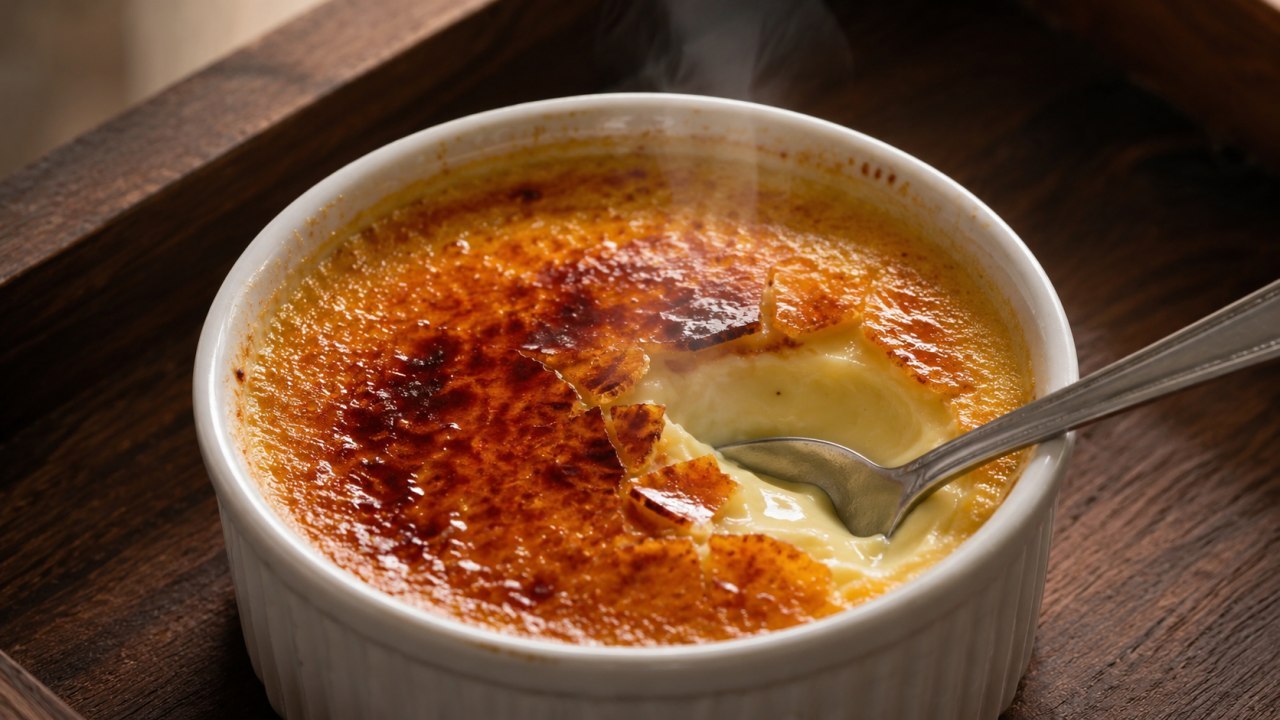
Crème Brûlée
Jump to Recipe ↓The Principle
Egg proteins don't have one setting temperature — they have a range. They begin setting at 150°F and fully set by 170°F. At 180°F, they scramble. A water bath keeps the custard at exactly the right temperature by creating a ceiling the water can't exceed. Your oven says 325°F — but water in the bath never goes above 212°F, and the custard inside stays in the perfect 160 to 170°F window.
What You Need
Structure
- 2 cups heavy cream (the fat carries flavor and creates mouthfeel)
The Set
- 5 large egg yolks (yolks only — whites would make it firm and eggy)
Flavor
- 1/3 cup granulated sugar (plus more for the topping)
- 1 vanilla bean (or 2 tsp pure vanilla extract)
- Pinch of kosher salt
The Crust
- 4 to 6 tsp superfine sugar (for torching. granulated works too)
Method
-
Preheat oven to 325°F. Set a kettle of water to boil. Place four 6-oz ramekins in a roasting pan.
-
Split the vanilla bean lengthwise and scrape the seeds into the cream. Add the pod too. Heat cream, vanilla, and salt in a saucepan over medium heat until small bubbles appear at the edges — about 180°F. Do not boil. Remove from heat. If using extract instead of bean, add it now. Let steep 10 minutes.
WhyHeat infuses the vanilla flavor into the fat of the cream. 180°F is hot enough to extract flavor compounds but below the boiling point where cream can scorch. Steeping off-heat prevents evaporation and keeps the fat content stable.
-
In a separate bowl, whisk egg yolks and 1/3 cup sugar until pale and slightly thickened — about 1 minute. Do not overbeat into a foam.
WhyWhisking dissolves the sugar and begins breaking down the yolk proteins so they'll set evenly. Too much whisking incorporates air, which creates bubbles that ruin the silky texture. You want smooth, not fluffy.
-
Remove vanilla pod from cream. Slowly pour about 1/3 of the hot cream into the yolk mixture in a thin stream, whisking constantly. Once combined, pour the tempered yolk mixture back into the remaining cream, whisking.
WhyThis is tempering — the most critical technique in custard-making. Pouring hot cream directly into yolks cooks them instantly into scrambled egg. By adding a small amount first, you raise the yolk temperature gradually. Once the yolks are warm, they can handle the rest of the hot cream without curdling. Skip this step and you will be straining sweet scrambled eggs out of your custard.
-
Strain the custard through a fine-mesh sieve into a measuring cup or pitcher with a spout. Skim any foam from the surface.
WhyThe strainer catches any bits of egg that did curdle — even with perfect tempering, a few strands form — plus bits of vanilla pod and foam. Foam on the surface bakes into an unpleasant skin. A perfectly smooth custard starts with a perfectly smooth liquid.
-
Pour custard evenly into the four ramekins. Pour the boiling water from the kettle into the roasting pan until it reaches about halfway up the sides of the ramekins. Carefully transfer the whole pan to the oven.
WhyThe water bath is not optional. Water boils at 212°F, which creates a thermal cap — no part of the custard can exceed 212°F even if your oven runs hot. The custard itself settles around 160 to 170°F internally, the sweet spot where egg proteins set into gel without curdling. Without the bath, the edges overcook before the center sets.
-
Bake 35 to 45 minutes. Check at 35 minutes: gently shake a ramekin. The custard should wobble as one connected mass — the center should jiggle like Jell-O, not ripple like liquid. If it ripples in concentric rings, give it 5 more minutes.
WhyThe jiggle test is more reliable than a thermometer here. A custard that's set-but-wobbly will carry over to perfection as it cools. One that's fully firm in the oven is already overcooked. When in doubt, pull earlier.
-
Remove ramekins from the water bath immediately. Cool on a wire rack for 30 minutes, then refrigerate uncovered for at least 4 hours. Overnight is better.
WhyRemoving from the water bath stops the cooking immediately. Leaving them in hot water means they keep cooking. Uncovered refrigeration lets surface moisture evaporate — a dry surface takes the sugar crust better.
-
Just before serving: blot the custard surface dry with a paper towel. Sprinkle 1 to 1.5 tsp sugar evenly over each custard. Tilt and tap to distribute. Torch the sugar with a kitchen torch, moving in small circles, until it melts, bubbles, and turns amber. Let the sugar harden for 1 minute, then serve immediately.
WhyBlotting dry prevents the sugar from dissolving into a syrup instead of caramelizing. The torch provides intense, focused heat that caramelizes the top without warming the custard beneath. A broiler works but heats the custard too — if using a broiler, work fast. The sugar should crack like glass under a spoon.
What Can Go Wrong
Grainy, scrambled texture?
You didn't temper properly, or the water bath was too shallow, or the oven was too hot.
Add hot cream to yolks slowly while whisking. Fill water bath halfway up the ramekins. Get an oven thermometer — your oven's 325°F might actually be 350°F.
Watery, separated custard?
Overbaked. Egg proteins over-coagulated and squeezed out liquid, a process called syneresis.
Pull at the jiggle stage. The center should wobble as one mass, not ripple in rings.
Sugar won't caramelize?
Sugar layer is too thick, or the surface wasn't dry, or you used coarse sugar.
Thin, even layer. Superfine sugar caramelizes fastest. Blot the surface first. Don't use raw or turbinado sugar — the crystals are too large.
The Science Behind This Recipe
Cook This Next
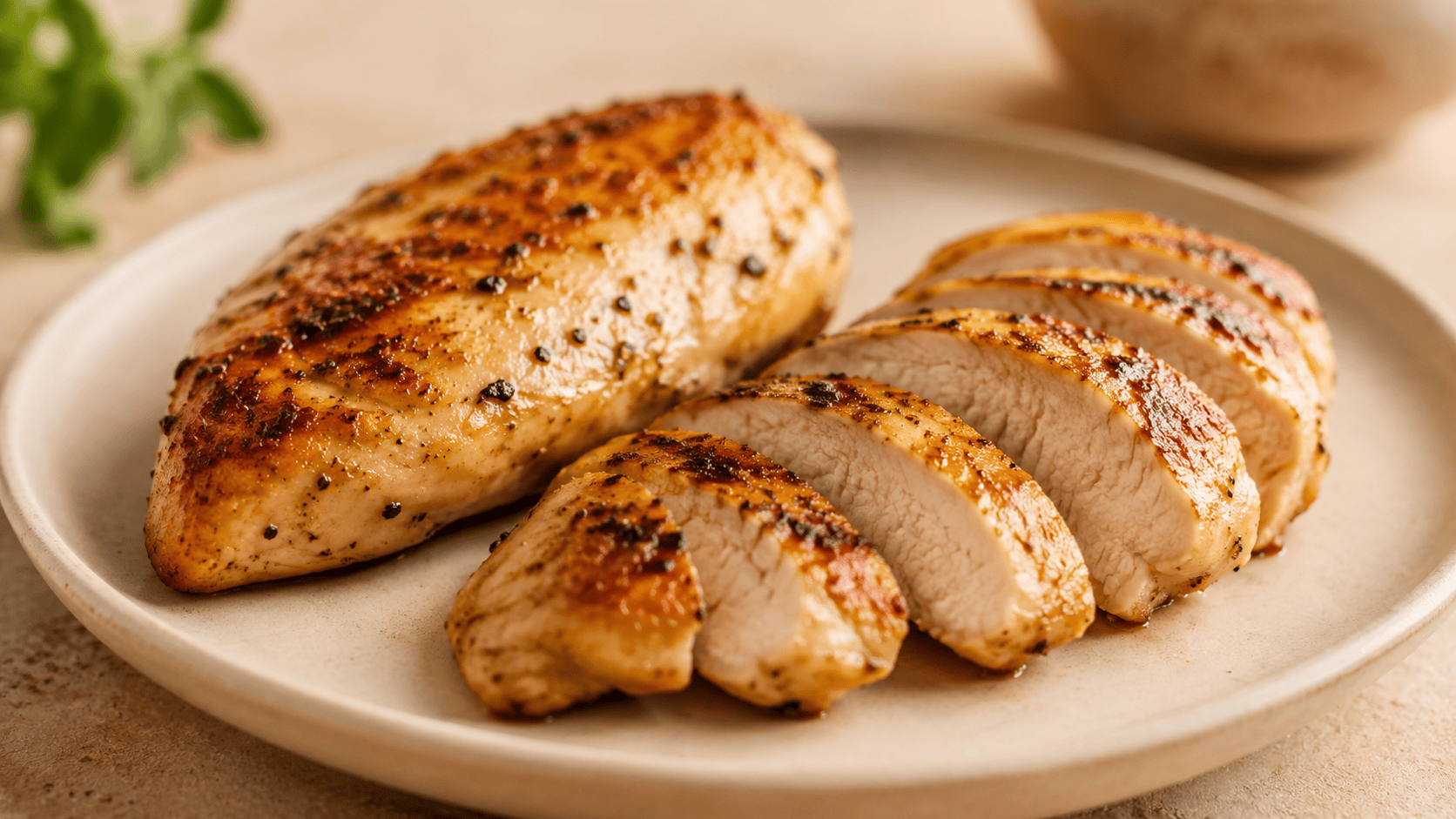
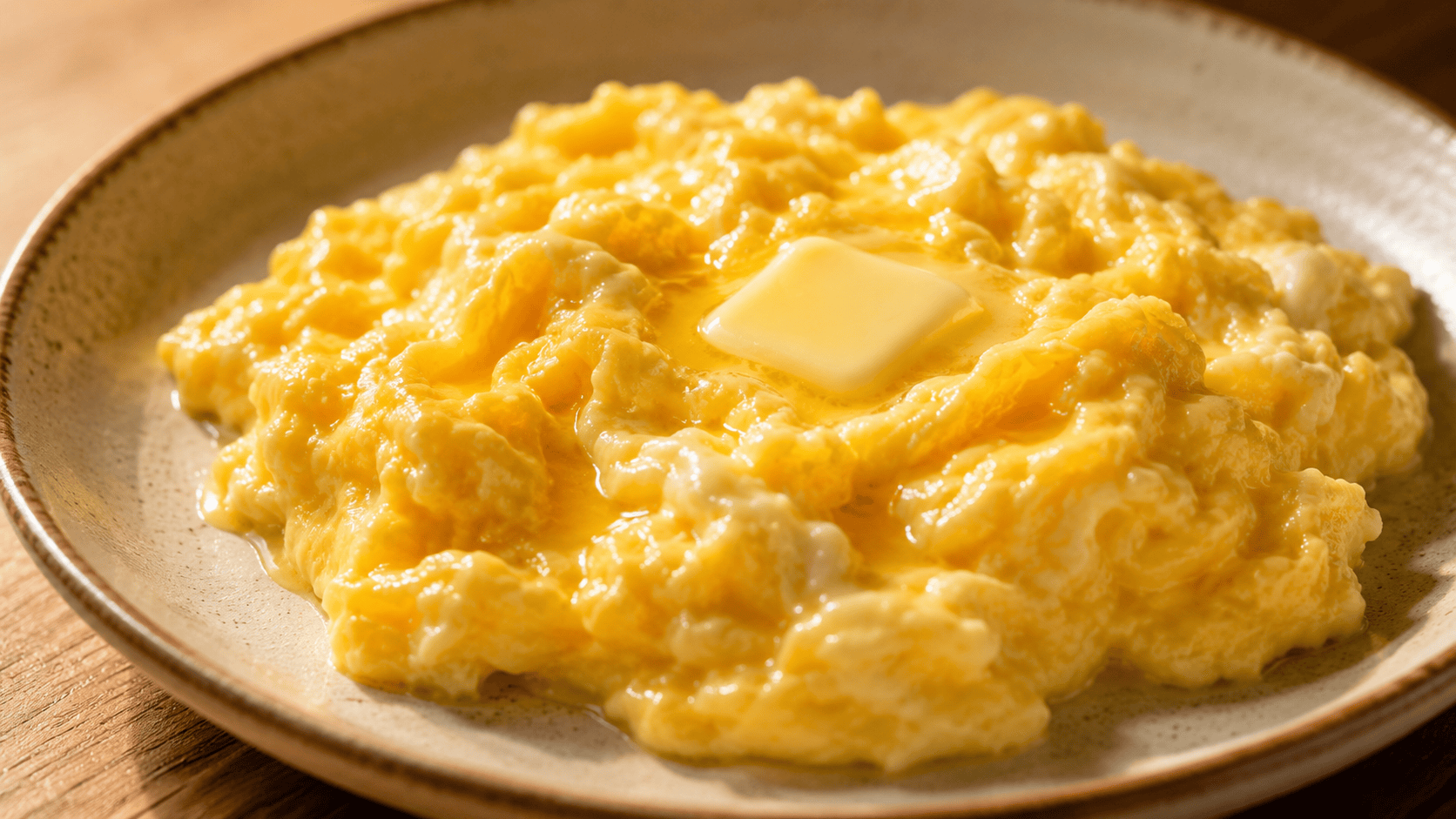
You made crème brûlée. You followed the recipe. You pulled a dish of sweet scrambled eggs out of the oven.
The problem isn’t your oven temperature. It’s that you crossed a 15-degree line you didn’t know existed. Egg proteins set into silk at 160 to 170°F. At 180°F, they scramble. A water bath is the only thing standing between those two numbers — and most recipes never explain why.
This recipe teaches you to control that window exactly. You’ll learn the three temperatures where egg proteins behave differently, how a pan of hot water creates a thermal ceiling your custard can’t cross, and the jiggle test that tells you when to pull. No thermometer needed.
Before You Start
Read Why Your Custard Turned to Scrambled Eggs for the full breakdown on the 15-degree window, why a water bath works as a thermal governor, and exactly how tempering prevents the pre-oven scramble. This recipe puts that article into practice.
Read Why Eggs Get Rubbery to understand protein coagulation across a temperature range. The same principle that makes scrambled eggs rubbery at 180°F makes custard grainy at the same temperature. Different dish, same science.
If you’ve got egg yolks, heavy cream, a vanilla bean, and a roasting pan, you’ve got everything you need for the silkiest dessert you’ll ever make at home. The water bath does the hard part.
Better cooking starts
with understanding.
One cooking problem at a time, explained clearly.
Follow @betterbitelab