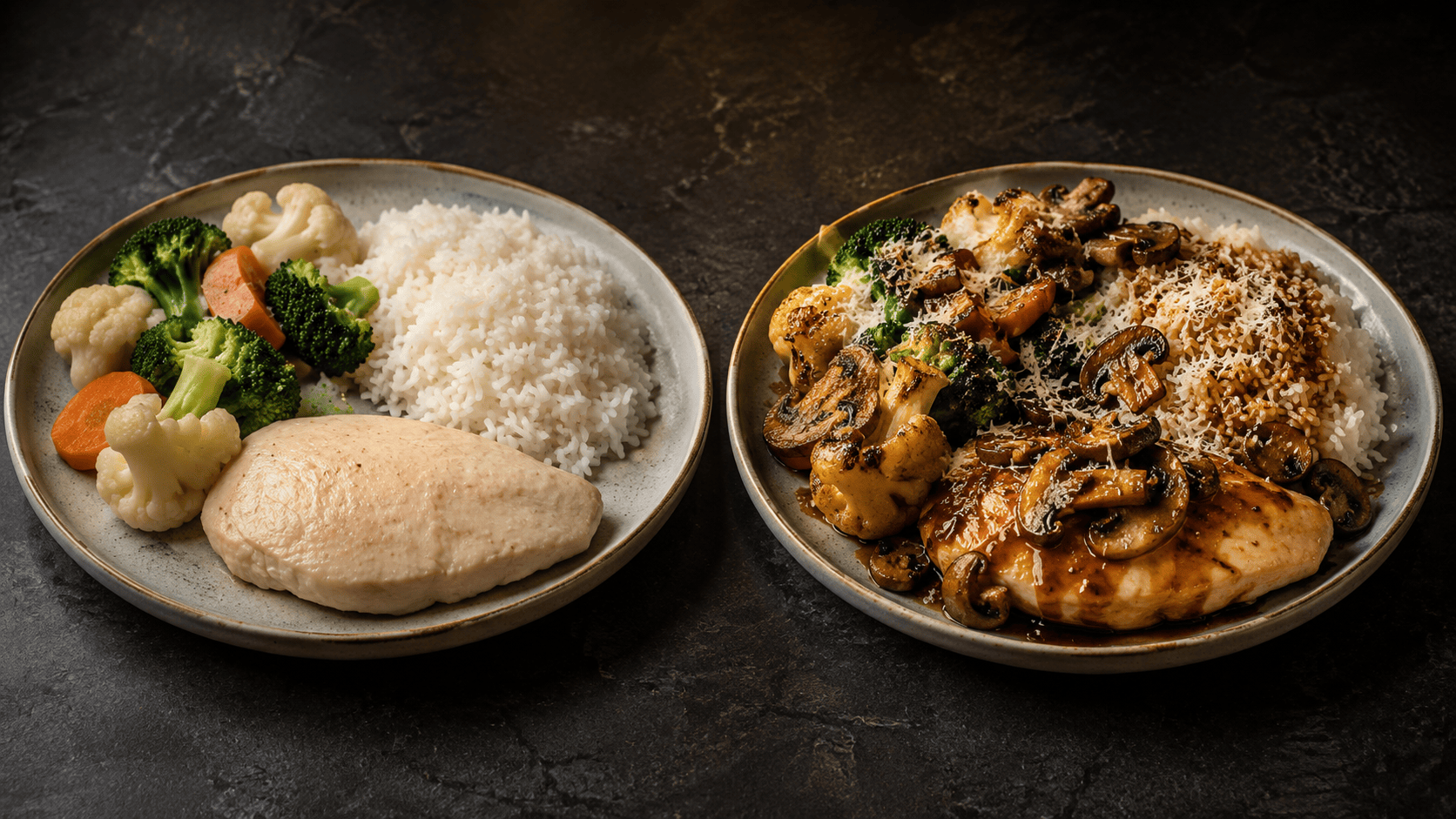
What probably happened
You didn't add enough salt, or you added it at the wrong time, or you're missing acid.
Why it happened
Salt doesn't make food taste salty — it makes food taste more like itself. Salt suppresses bitterness and amplifies sweetness and umami. Without enough salt, flavors stay locked up. But timing matters: salt added at the end sits on the surface. Salt added early penetrates and seasons from within. And acid — a squeeze of lemon, a splash of vinegar — brightens everything. Bland food is rarely missing a mystery ingredient. It's almost always missing salt, acid, or both.
How to save it now
If the dish is already cooked and tastes flat, add salt in small pinches, tasting after each one. Then add a small amount of acid — lemon juice, vinegar, or even a splash of something pickled. The acid won't make the dish sour if you use it correctly. It'll make the existing flavors pop. If it still tastes flat, it might need umami: a dash of soy sauce, a spoonful of tomato paste, or a sprinkle of Parmesan.
How to prevent it next time
Salt in layers, not all at the end. Season your protein before it hits the pan. Salt your pasta water until it tastes like the sea. Add a pinch to your onions as they sweat. Each layer of salt builds depth. And finish with acid: almost every dish benefits from a small hit of brightness at the end.
Tiny kitchen test
Make a simple tomato sauce and split it into two bowls. Leave one as-is. Add a pinch of salt and a teaspoon of red wine vinegar to the other. Taste them side by side. The seasoned one won't taste salty or vinegary. It'll just taste more like tomatoes.
Still not working? Ask us on Instagram and we'll dig into it.