Principle Lab
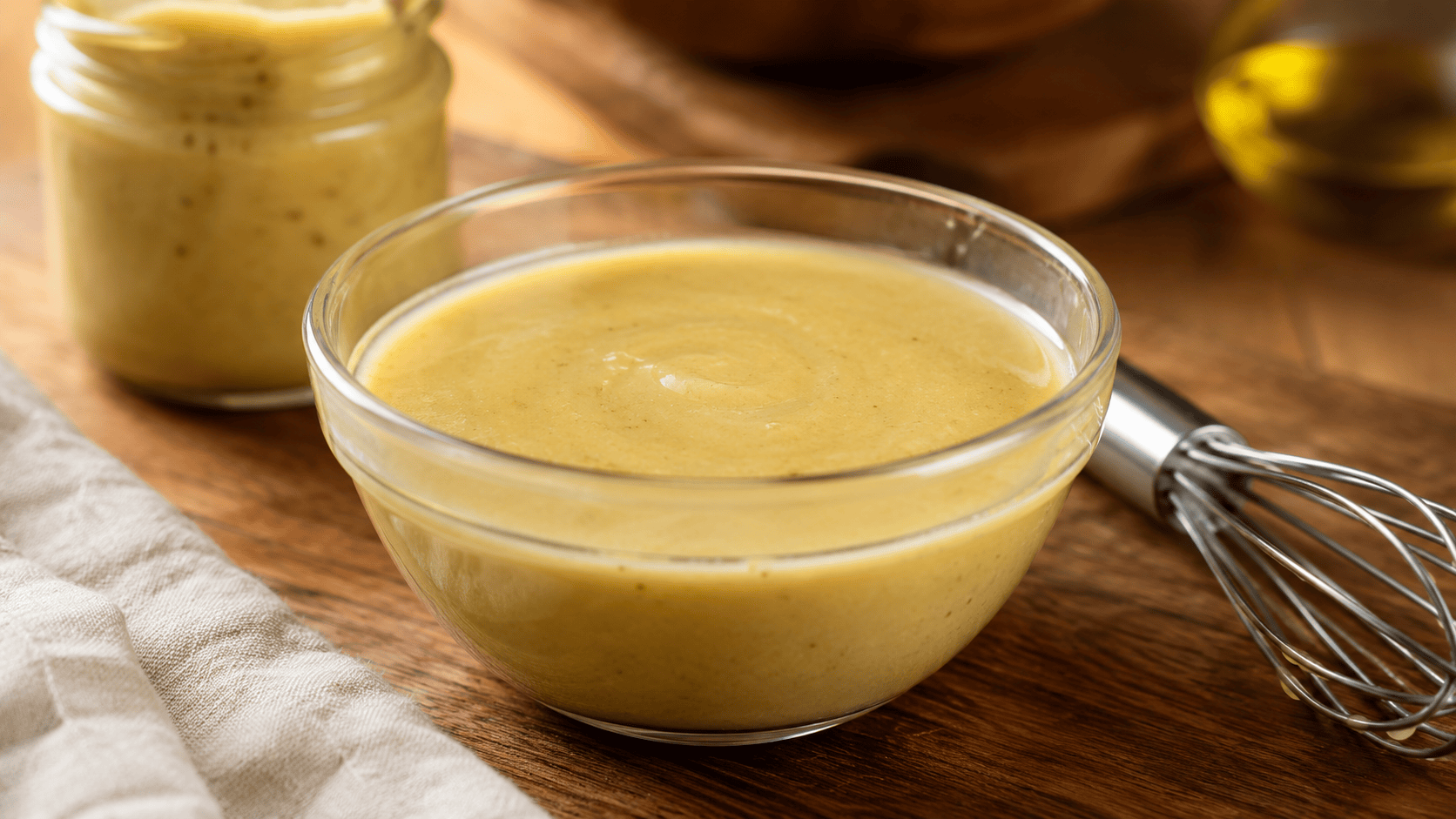
Shimmer-Test Vinaigrette
Jump to Recipe ↓The Principle
Oil and vinegar don't mix because oil is non-polar and vinegar is polar. An emulsifier like mustard bridges the gap. Add oil slowly to keep droplets small and the emulsion stable.
What You Need
Structure
- 3 tbsp extra virgin olive oil (room temperature. Cold oil makes a less stable emulsion.)
- 1 tbsp red wine vinegar
The Emulsifier
- 1 tsp Dijon mustard (contains lecithin, which keeps oil droplets from merging)
Flavor Support
- Pinch kosher salt
- Fresh cracked black pepper
Method
-
Whisk vinegar, mustard, salt, and pepper in a small bowl until the salt dissolves.
WhyDissolving salt in the vinegar first prevents a grainy vinaigrette. Salt dissolves faster in acid than in oil.
-
Drizzle oil in very slowly while whisking constantly. A thin stream, not a pour. Keep whisking until the mixture looks creamy and uniform.
WhySlow addition creates smaller oil droplets. Smaller droplets stay suspended longer. A fast pour creates large droplets that merge and separate almost immediately.
-
Taste. Adjust. More vinegar for sharpness, more oil for roundness, more salt for balance.
WhyThe 3:1 oil to vinegar ratio is a starting point, not a law. Your vinegar, your oil, and your preferences decide the final ratio.
What Can Go Wrong
Broke and separated?
Oil was added too fast, or you skipped the mustard.
Start over with a fresh teaspoon of mustard and vinegar in a clean bowl. Whisk the broken vinaigrette into it slowly. The mustard in the fresh base will re-emulsify it.
Too sharp?
Not enough oil, or the vinegar is unusually strong.
Add more oil a teaspoon at a time. Or swap half the vinegar for lemon juice next time.
Flat taste?
Not enough salt. Vinaigrettes need more salt than most people expect.
Add a pinch of salt. Stir. Taste. Repeat until it pops.
The Science Behind This Recipe
Cook This Next
You whisked oil and vinegar. It looked emulsified for maybe 30 seconds. Then it broke. Two distinct layers, like nothing ever happened.
The problem wasn’t your whisking speed. It was that oil and vinegar are incompatible at the molecular level. Oil is non-polar. Vinegar is polar. They repel each other the same way oil beads up in a pan of water. Whisking temporarily forces the oil into tiny droplets, but without something to keep those droplets apart, they merge and separate within a minute.
That something is an emulsifier. Mustard contains lecithin, a molecule with one polar end and one non-polar end. The polar end grabs the vinegar. The non-polar end grabs the oil. It wraps around each oil droplet and prevents them from merging. That’s the difference between a 30-second vinaigrette and one that stays creamy through dinner.
The other variable is droplet size. Adding oil slowly while whisking creates smaller droplets. Small droplets stay suspended. Large droplets merge quickly. A thin stream while whisking constantly is the technique. Not a pour. Not a dump.
Before You Start
Read Why Vinaigrettes Break for the full breakdown on polar and non-polar molecules, what lecithin actually does, and why slow addition matters at the molecular level.
Read Why Oil Shimmers Before It Smokes to understand oil temperature signals. This recipe uses room-temperature oil for a reason. Cold oil makes for a less stable emulsion because the oil molecules are more viscous and resist forming small droplets.
Once you understand those two principles, you’ll never buy bottled dressing again.
Better cooking starts
with understanding.
One cooking problem at a time, explained clearly.
Follow @betterbitelab