What probably happened
You used the wrong cheese, or your oil wasn't hot enough, or you moved the cheese too soon.
Why it happened
Queso frito — Dominican fried cheese — only works with queso de freír, a firm, high-melting-point white cheese made specifically for frying. It has low moisture and a protein structure that holds together under heat. If you substitute mozzarella, Monterey Jack, or any melting cheese, it'll liquefy in the pan because those cheeses have higher moisture and proteins designed to stretch and flow when heated. Queso de freír doesn't melt — it softens slightly and forms a golden crust. But even the right cheese fails if the oil isn't hot enough. The cheese needs to hit hot oil so the outside sears immediately, forming a crust before the inside has time to soften too much. And moving the cheese too early tears that crust before it sets.
How to save it now
If the cheese has melted into a puddle, there's no saving it as a solid piece. Scrape it onto a plate — it'll still taste good on bread or scrambled into eggs. Next time, get queso de freír specifically. Brands like Tropical are widely available in Latin markets and many regular supermarkets.
How to prevent it next time
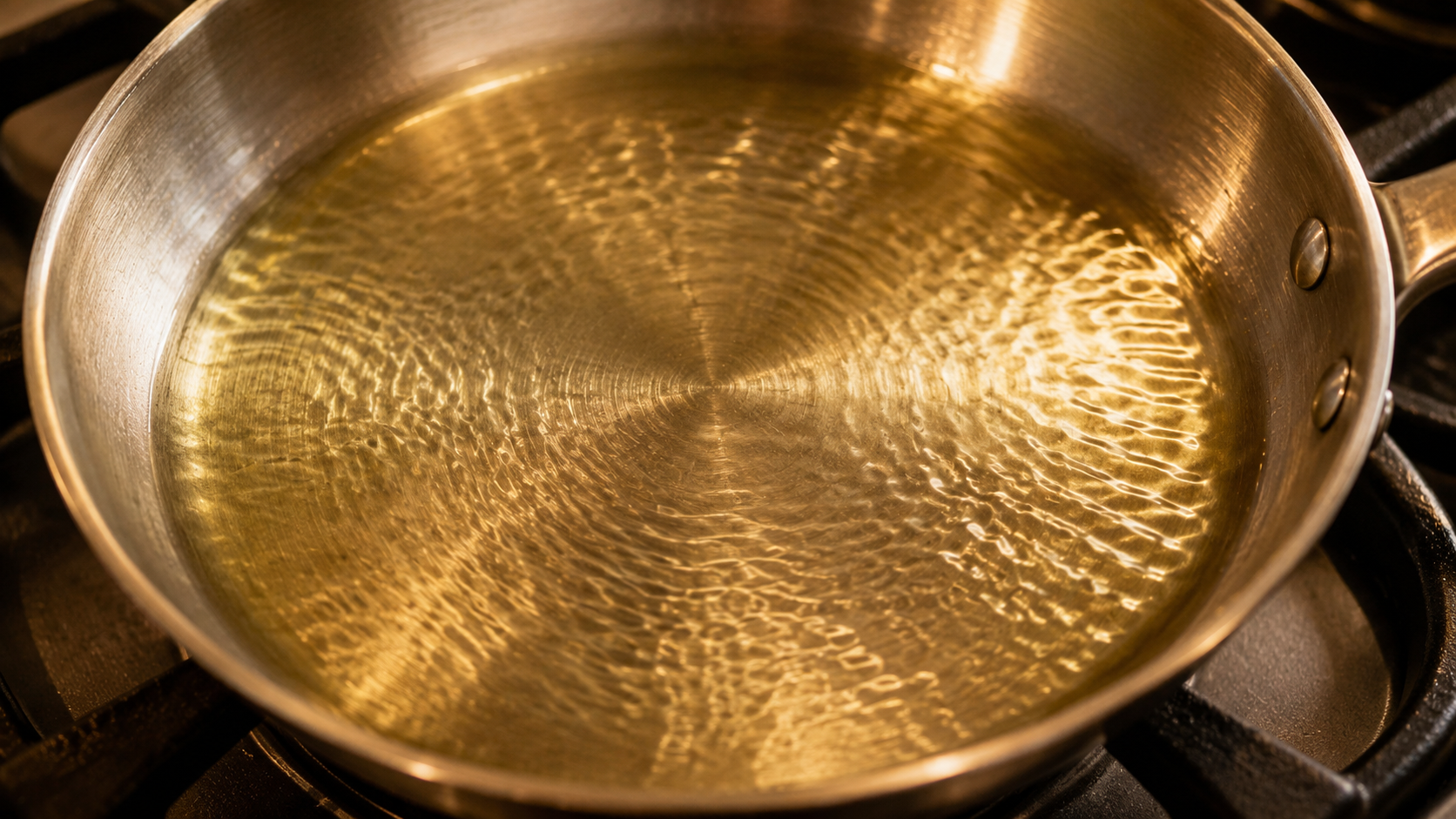
Buy cheese labeled 'queso de freír' or 'queso para freír.' Slice it into ½-inch thick pieces — too thin and it'll soften through before the crust forms. Pat the slices completely dry with paper towels (surface moisture creates steam, which prevents browning). Heat about ¼ inch of neutral oil in a nonstick or cast-iron pan to 350°F. Lay the cheese in gently and don't touch it for 2–3 minutes per side. Flip only once, when the bottom is deep golden and the edges look crisp.
Tiny kitchen test
Buy queso de freír and a block of low-moisture mozzarella. Slice both the same thickness. Fry them side by side in the same pan. The queso de freír will hold its shape and develop a golden crust. The mozzarella will spread into a puddle within 60 seconds.
Still not working? Ask us on Instagram and we'll dig into it.