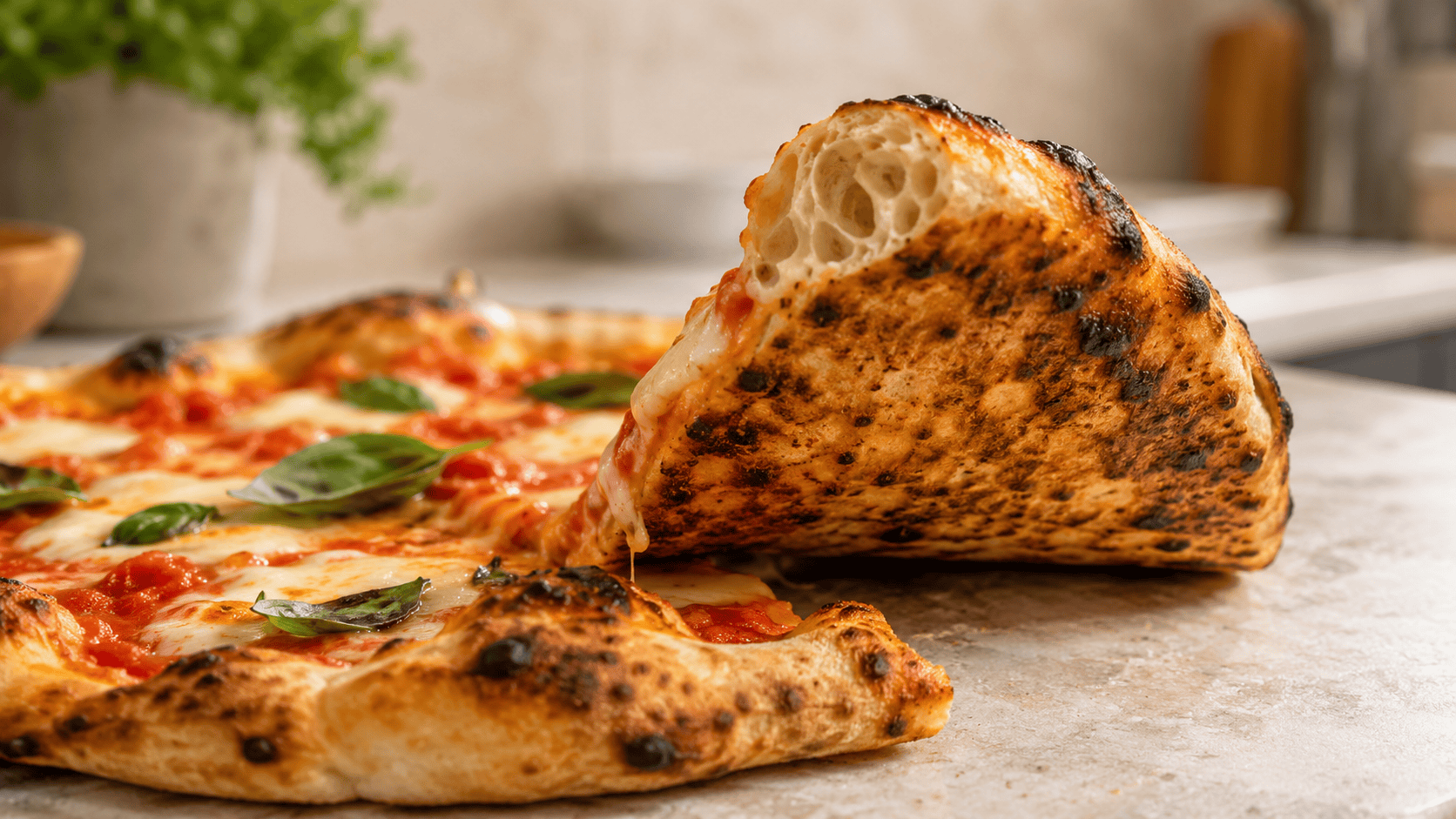
You followed the recipe. You cranked the oven to 500°F. You waited for the preheat beep. You slid in your pizza with high hopes. And out came a crust that was pale, soft, and folded like a napkin.
This happens to almost every home cook. And here’s the part most pizza recipes won’t tell you: your dough recipe is probably fine. The problem is something else entirely.
What’s Actually Happening
Your Oven’s Air Is Lying to You
The biggest misconception about crispy pizza crust is that oven temperature is the answer. “Just crank it to max” is the advice you’ll hear everywhere. It’s not wrong. But it’s incomplete.
Here’s why: air is a terrible heat conductor. Hot air alone doesn’t transfer enough energy to crisp dough quickly. This is why professional pizza ovens (which run at 800 to 900°F) don’t just blast hot air. They have stone or brick floors. The dough sits directly on a scorching hot surface, and that surface dumps heat straight into the bottom of the crust.
Your home oven maxes out around 500°F. That’s half the temperature of a pizzeria oven. You can’t fix that by turning a dial. But you can fix how the heat gets from your oven into your dough.
Your Stone Is a Heat Battery
A pizza stone or baking steel isn’t just a flat surface to bake on. It’s a heat battery. It absorbs thermal energy from the oven over time and stores it. When dough hits a properly preheated stone, that stored energy discharges instantly into the bottom of the crust. That rapid heat transfer drives off moisture and starts the browning reactions that produce a crispy, golden bottom.
But here’s the part almost nobody tells you: a stone needs 45 to 60 minutes to fully charge. If you throw your stone in when the oven beeps after 15 minutes of preheating, the oven air might be at 500°F. But the core of your stone is still lukewarm. You’re baking on a cold slab.
A baking steel holds roughly twice as much heat as a stone. Both work. But only if you give them enough time to saturate with heat. This is the step that makes or breaks your crust.
The Fix: 5 Steps to a Crispy Crust Tonight
1. Preheat Your Stone or Steel for at Least 45–60 Minutes
Set your oven to its maximum temperature. Put the stone or steel on the middle rack. Walk away for an hour. This is not optional. The surface must be saturated with heat before dough touches it.
If you’re short on time, 30 minutes is better than 15. But 60 minutes is the real target.
2. Stretch Your Dough Thinner Than You Think
Home ovens can’t deliver enough heat to crisp a thick dough through before the top burns. A thick crust has too much internal moisture to drive off in time. Aim for about ⅛ inch. Thin dough equals faster moisture evaporation, faster crisping, and better balance with your toppings.
If your dough keeps snapping back when you stretch it, that’s a gluten relaxation problem. Let it rest. (Read: Why Dough Needs Rest.)
3. Par-Bake with Sauce Only for 2–3 Minutes
This is the technique that changes everything. Par-baking means baking the dough with sauce only (no cheese, no toppings) for 2 to 3 minutes before adding anything else.
Why it works: this lets the bottom crust set and begin crisping before moisture from the cheese and toppings has a chance to steam it soft. Take the pizza out, add your cheese and toppings, then finish baking. The bottom stays crisp because it got a head start.
4. Manage Your Mozzarella
Fresh mozzarella is delicious. It’s also about 52% water. That water turns to steam in the oven and drips directly onto your crust. The very thing you just spent 60 minutes preheating your stone to prevent.
The fix isn’t to avoid fresh mozzarella. It’s to manage the water:
- Slice fresh mozzarella and let it drain on paper towels for 20–30 minutes before topping your pizza
- Or use low-moisture mozzarella (the kind sold in blocks or pre-shredded)
- Both work. The point is: don’t put a wet cheese on a dough you want to stay crisp
5. Finish Under the Broiler for 60 Seconds
Your stone is maintaining bottom heat. Your cheese is melted. To get that bubbly, slightly browned top and finish the rim crust, switch the broiler on for the last 60 seconds.
Keep a close eye on it. Broilers work fast. The goal is golden and bubbling, not charcoal.
One Myth Worth Busting
“Just crank your oven to maximum temperature.”
Your oven’s air temperature matters less than the surface temperature of your stone. An oven at 500°F with a stone that’s only been preheating for 15 minutes will give you a soggy crust. The same oven with a stone that’s been preheating for an hour will give you a crispy one. It’s not about the dial. It’s about what’s stored in your baking surface.
Your Crispy Pizza Checklist
- ☐ Preheat stone or steel for 45–60 minutes at max oven temperature
- ☐ Stretch dough to ~⅛ inch thickness
- ☐ Par-bake with sauce only for 2–3 minutes
- ☐ Drain fresh mozzarella on paper towels for 20–30 minutes, or use low-moisture
- ☐ Finish under the broiler for the final 60 seconds
Cook the Principle
Put this into practice.
Overnight Pizza Dough — 12 hr ferment · Beginner
Save this. Screenshot it. Tape it to your oven. Use it Saturday night.