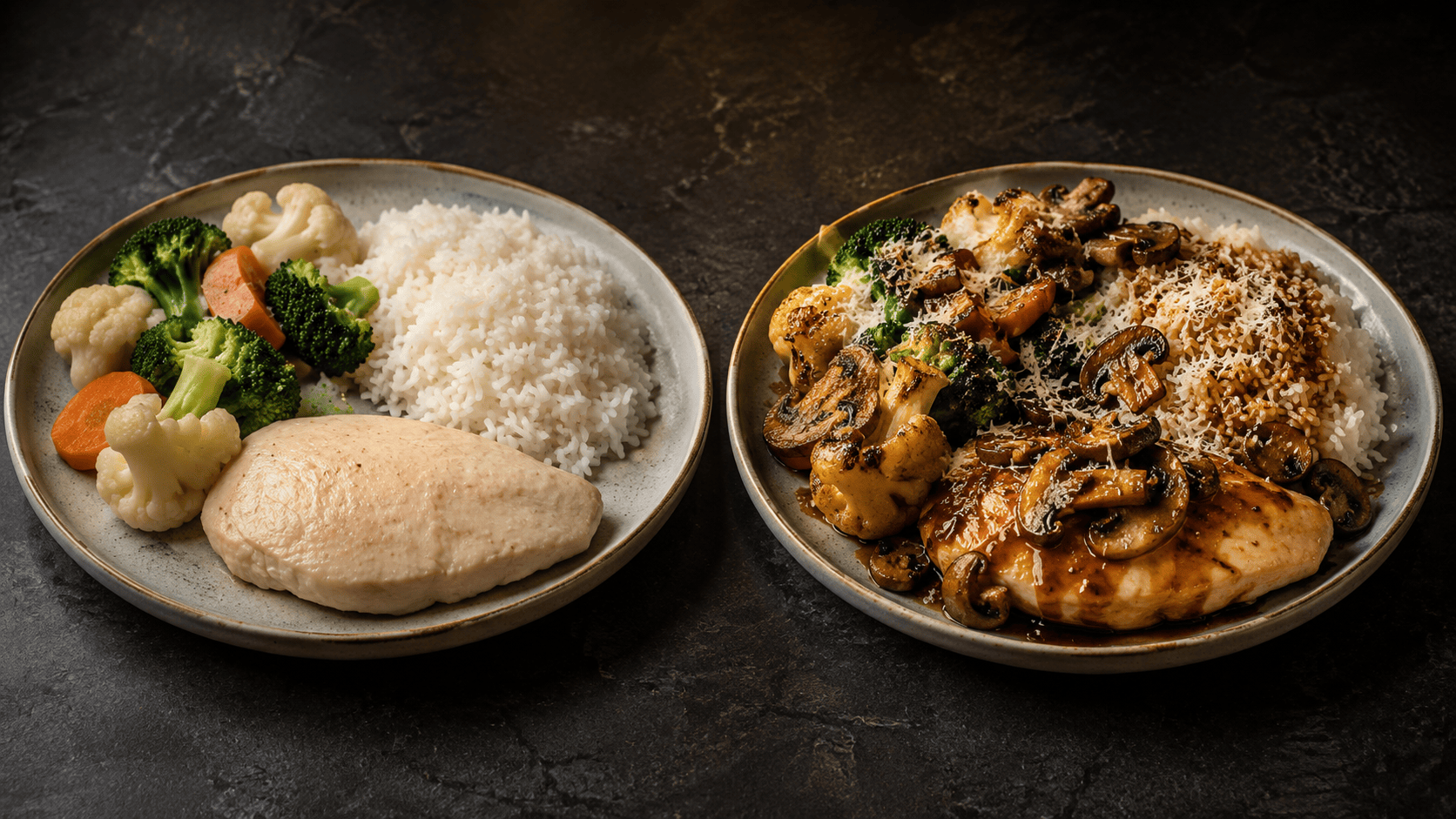
You taste salt. Sweet. Sour. Bitter. Four tastes you have known since childhood. Then there is a fifth one that everyone talks about but nobody explains well. Umami. The savory, mouth-filling richness that makes food taste complete.
Umami is not a spice. It is not a technique. It is a chemical reality — a taste receptor on your tongue that responds to specific molecules found in certain foods. Understanding it changes how you cook.
What Umami Actually Is
Umami is the taste of glutamate. Glutamate is an amino acid found naturally in many foods. When glutamate binds to umami receptors on your tongue, it triggers a sensation that is distinct from the other four tastes. It is savory, brothy, and rounds out other flavors in a way that is hard to describe but unmistakable when you taste it.
MSG — monosodium glutamate — is purified glutamate bound to sodium. It is not an artificial chemical. It is the sodium salt of the same amino acid found in tomatoes, aged cheese, and dried mushrooms. Your body processes it the same way.
The Synergy Effect
Glutamate is not the only umami compound. Two nucleotides — inosinate and guanylate — also trigger umami receptors. Inosinate is found in meat and fish. Guanylate is found in dried mushrooms. On their own, these nucleotides produce a mild umami effect. But when they are present alongside glutamate, the umami intensity multiplies.
This is why certain food pairings are so powerful. Parmesan on tomato sauce. Anchovy in beef stew. Dried mushrooms in chicken soup. You are not adding flavor on top of flavor. You are triggering a receptor synergy that amplifies everything.
Where Umami Lives
Glutamate-rich foods: tomatoes (especially concentrated as paste), aged cheeses (parmesan, pecorino), soy sauce, fish sauce, miso, nutritional yeast, walnuts, green tea.
Inosinate-rich foods: meat, poultry, fish, shellfish, especially when dried or aged (prosciutto, anchovies, bonito flakes).
Guanylate-rich foods: dried mushrooms, especially shiitake. Fresh mushrooms have less.
How to Use It
1. Add a glutamate source to every savory dish. A tablespoon of tomato paste in a stew. A splash of soy sauce in a marinade. Grated parmesan on roasted vegetables.
2. Pair glutamate with inosinate or guanylate. Meat + aged cheese. Tomatoes + anchovies. Mushrooms + soy sauce. The synergy is real and the difference is noticeable.
3. Use MSG if you want. It is not cheating. It is the same molecule that makes parmesan delicious. A pinch in a pot of soup does what hours of reduction would do.
Your Umami Checklist
- ☐ Glutamate: tomatoes, parmesan, soy sauce, fish sauce, miso
- ☐ Inosinate: meat, fish, anchovies, bonito
- ☐ Guanylate: dried mushrooms, especially shiitake
- ☐ Synergy: pair glutamate + inosinate or guanylate
- ☐ MSG is not cheating
Umami is not mysterious. It is chemistry you can use.