You drained your pasta and dumped the water down the sink. It’s what everyone does. Then you tossed the pasta with sauce and the sauce slid right off. It pooled at the bottom of the bowl. The pasta was coated for about five seconds, then naked.
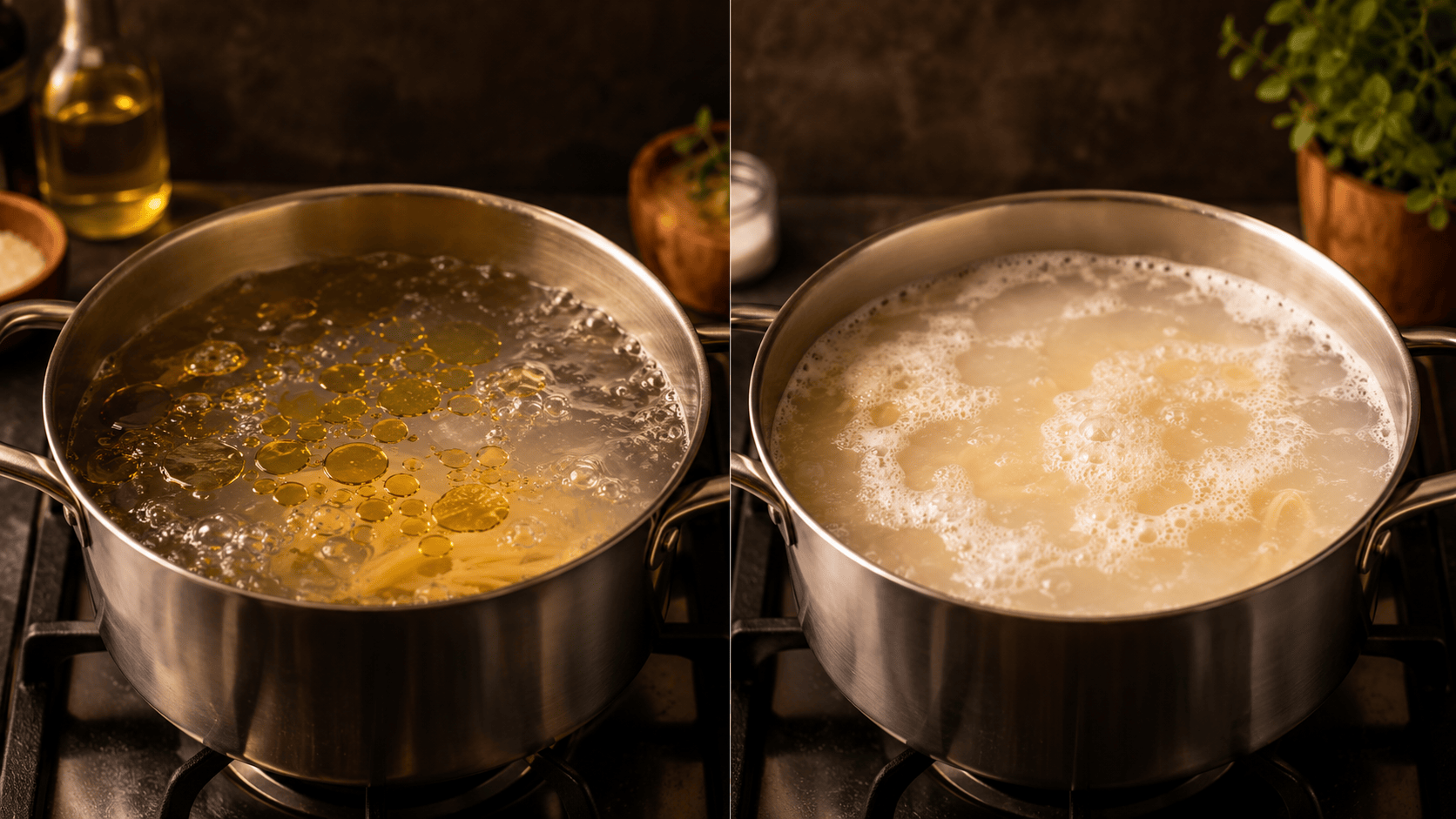
The missing ingredient was already in your pot. That cloudy pasta water is a suspension of starch granules that act as a powerful emulsifier. It binds fat and water together into a sauce that clings to every strand.
What’s in Pasta Water
As pasta cooks, starch granules on the surface of the noodles absorb water and swell. Some of those granules break free and disperse into the water. The result is a thin starch solution — pasta water.
That starch does two things. First, it thickens slightly when heated with a sauce. Second, and more importantly, it acts as an emulsifier. Starch molecules have regions that interact with water and regions that interact with fat. When you add starchy pasta water to a pan with oil or butter and toss it with pasta, the starch bridges the gap between the fat and the water in the sauce. The result is a creamy emulsion that coats every noodle.
The Oil Myth
Some people add oil to pasta water. The theory is that it prevents sticking. The reality is that oil floats on top of the water and does nothing while the pasta cooks. When you drain the pasta, a thin film of oil coats the noodles and prevents sauce from adhering.
The only thing that prevents sticking is enough water and an occasional stir. Save the oil for the sauce.
The Fix
1. Undercook the pasta by one minute. Drain it a minute before the package says. It finishes cooking in the sauce and absorbs flavor instead of water.
2. Reserve a cup of pasta water before draining. Always. Every time. No exceptions.
3. Transfer the pasta directly to the sauce. Tongs or a spider strainer work better than a colander. You want some pasta water clinging to the noodles.
4. Add pasta water a splash at a time. Toss the pasta in the sauce. Add a splash of pasta water. Toss again. The sauce will go from oily and separate to creamy and cohesive in seconds.
5. Finish with fat. A pat of cold butter or a drizzle of good olive oil at the very end. The starch emulsion holds it.
Your Pasta Water Checklist
- ☐ Salt the water until it tastes like the sea
- ☐ Reserve one cup before draining — always
- ☐ No oil in the water
- ☐ Pasta finishes cooking in the sauce
- ☐ Pasta water + tossing = sauce that clings
The best ingredient in your kitchen is the one you’ve been throwing away.