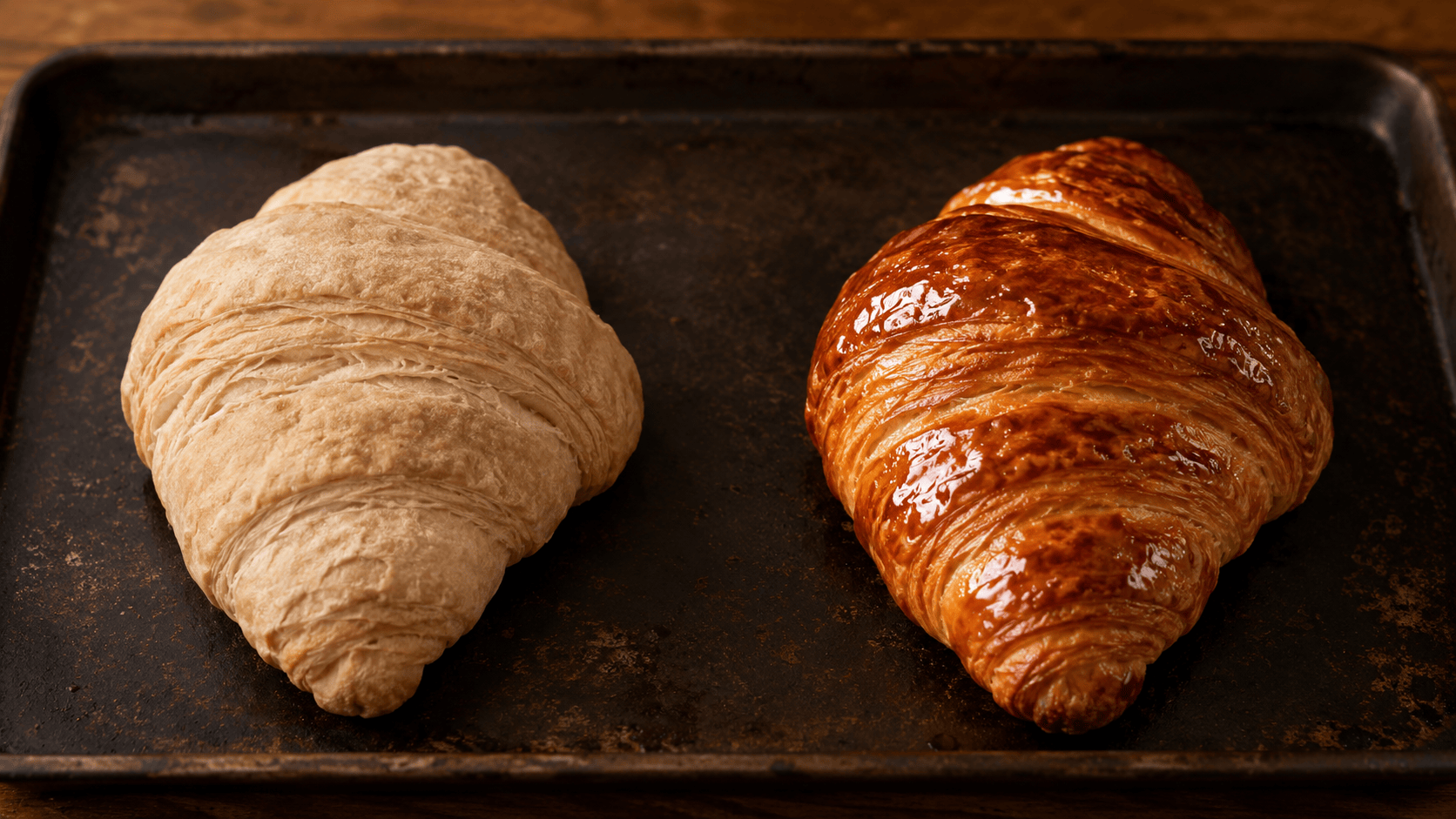
You brushed egg wash on your pie crust before it went into the oven. The recipe said it would come out golden brown and glossy. What you got was patchy — dark in some spots, pale in others, with an uneven finish that looked nothing like the photos.
The egg wash is the simplest step in baking. One egg, a splash of water, a quick brush. But there is more going on than most recipes admit. Here’s the science behind a proper egg wash and why the details matter.
What Egg Wash Does
Egg wash does two things. It promotes browning and it creates sheen.
The browning comes from the protein in the egg. Egg white is about 10% protein. Those proteins participate in the Maillard reaction on the surface of the dough. More protein equals more browning.
The sheen comes from the fat in the yolk. Egg yolk is about 30% fat. The fat melts and spreads across the surface during baking, creating a glossy finish. More yolk equals more shine.
The Egg Wash Variations
Whole egg + water. The standard. One whole egg beaten with a tablespoon of water. Good browning, moderate sheen. The water thins the egg so it spreads evenly instead of pooling.
Whole egg + milk. Richer color, softer sheen. The milk sugars add extra browning. Good for bread and dinner rolls.
Yolk only + water or cream. Maximum sheen, deep golden color. Use this when you want a lacquered finish. Good for enriched doughs like brioche.
White only + water. Maximum browning, no sheen. Use this when you want a matte brown finish or when you’re adhering seeds to bread. The white acts as glue and browning agent.
The Mistakes That Ruin Egg Wash
Egg wash too thick. Undiluted egg puddles in crevices and bakes into dark, rubbery patches. Always thin with water or milk.
Brushed on too early. Egg wash dries out on the dough surface if left too long before baking. Brush it on just before the pastry goes into the oven.
Too much pressure. Pressing too hard with the brush deflates delicate dough and creates grooves. Light strokes. Just enough to coat.
Double-brushing cold dough. If the dough is cold, the first layer of egg wash sets before you can spread a second. Work fast and don’t go back over it.
The Fix
1. Whole egg + 1 tbsp water. This is the default. Start here and adjust.
2. Strain the egg. Push it through a fine mesh strainer. This breaks up the chalaza (the white cord) that can leave streaks.
3. Light, quick strokes. Coat the surface. Don’t soak it. Don’t press.
4. Bake immediately. Egg wash goes on last, seconds before the pan hits the oven.
Your Egg Wash Checklist
- ☐ Whole egg + 1 tbsp water (standard)
- ☐ Yolk only + cream (maximum gloss)
- ☐ White only (adhesion + browning, no shine)
- ☐ Strain to remove streaks
- ☐ Light strokes, bake immediately
One egg, one minute, the difference between pale and golden.