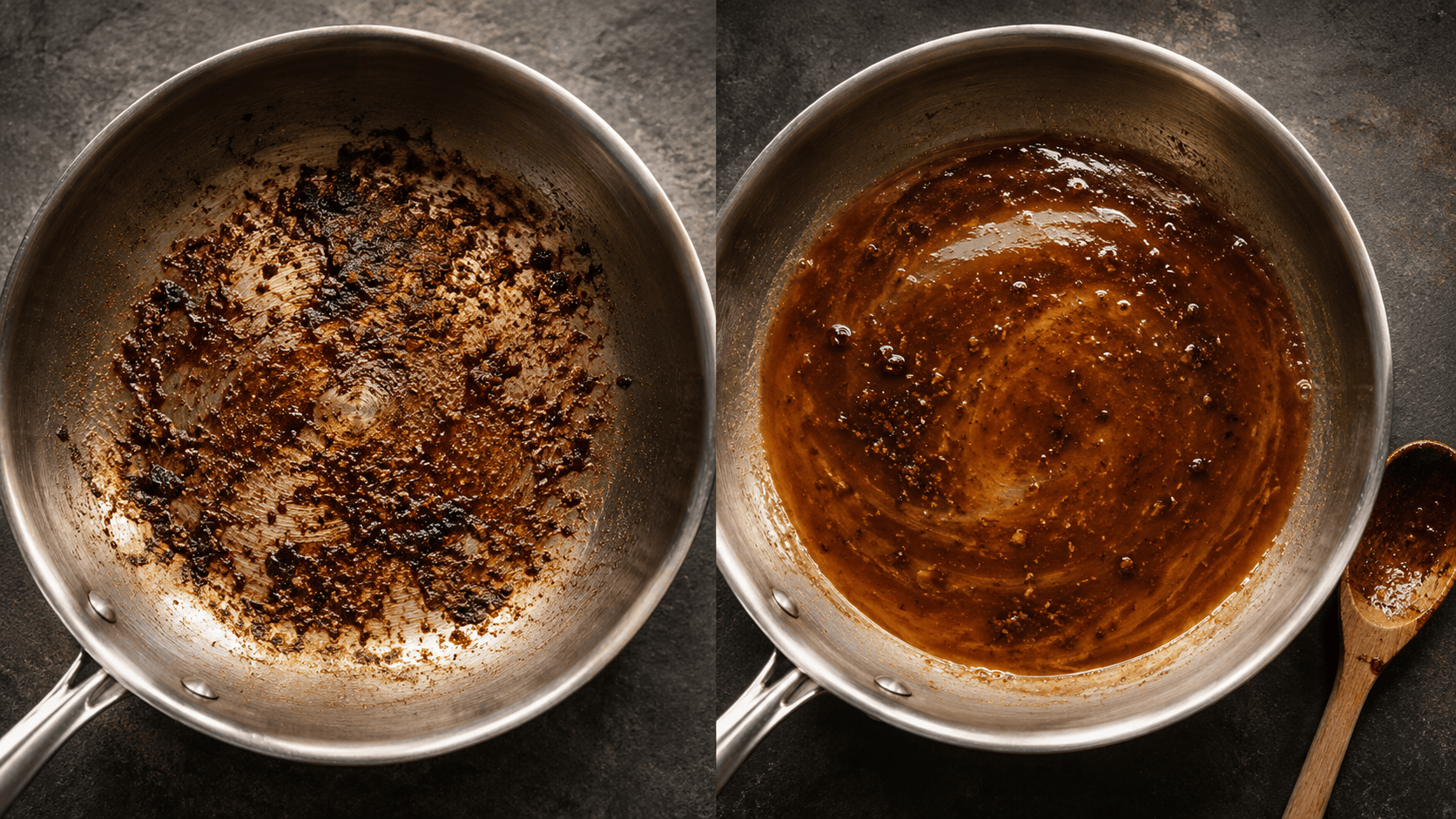
You seared chicken thighs in a stainless steel pan. The skin crisped up beautifully. You removed the chicken and looked at the bottom of the pan. It was covered in brown bits. Stuck hard.
You added water and scrubbed. The brown bits went down the drain. And with them went the best pan sauce you never made.
Those brown bits are called fond. They are concentrated flavor, and deglazing turns them into sauce in under a minute. Here’s how.
What Fond Actually Is
Fond is the result of the Maillard reaction happening where meat meets hot metal. Proteins and sugars from the meat break down and recombine into hundreds of new compounds — the same reaction that creates the brown crust on a seared steak. The fond on the pan is essentially the crust that stuck.
It is not burnt. Burnt is black and bitter. Fond is brown and savory. The difference is temperature control. When the pan is hot enough for Maillard but not so hot that the sugars carbonize, the fond builds up in layers of deep, meaty flavor.
How Deglazing Works
Deglazing is the simplest technique in cooking. You add a small amount of cold liquid to the hot pan. The temperature shock loosens the fond from the metal. You scrape with a wooden spoon or spatula. The fond dissolves into the liquid, creating an instant sauce base.
The science is straightforward: the cold liquid contracts the metal slightly and dissolves the water-soluble flavor compounds in the fond. Fat-soluble compounds need a little more help, which is why wine or stock works better than water alone.
The Liquid Matters
Wine. Red or white. The alcohol dissolves fat-soluble flavor compounds that water misses. The acidity brightens the sauce. Cook off the alcohol for 30 seconds before adding other liquids.
Stock. Chicken, beef, or vegetable. Adds body and depth. Use stock when you want a richer, less acidic sauce.
Water. Works in a pinch. It deglazes the pan but adds no flavor of its own. Use water only when the fond itself is so flavorful it doesn’t need help — or when you’re deglazing vegetables, not meat.
Vinegar or citrus. A splash of acid at the end of the deglaze cuts through richness. Add it after the main liquid has reduced.
The Fix for Perfect Pan Sauce
1. Don’t clean the pan between steps. Sear the meat. Remove it. Deglaze immediately while the pan is still hot.
2. Add cold liquid to the hot pan. The temperature difference helps release the fond.
3. Scrape with a wooden spoon. Metal works but wood is gentler on the pan and gives you better control.
4. Reduce. Let the liquid simmer until it coats the back of a spoon. Finish with a pat of cold butter for shine and body.
Your Deglazing Checklist
- ☐ Fond is brown, not black
- ☐ Cold liquid into hot pan
- ☐ Scrape everything
- ☐ Reduce until it coats a spoon
- ☐ Finish with cold butter
The fond is free flavor you already made. Stop washing it down the drain.