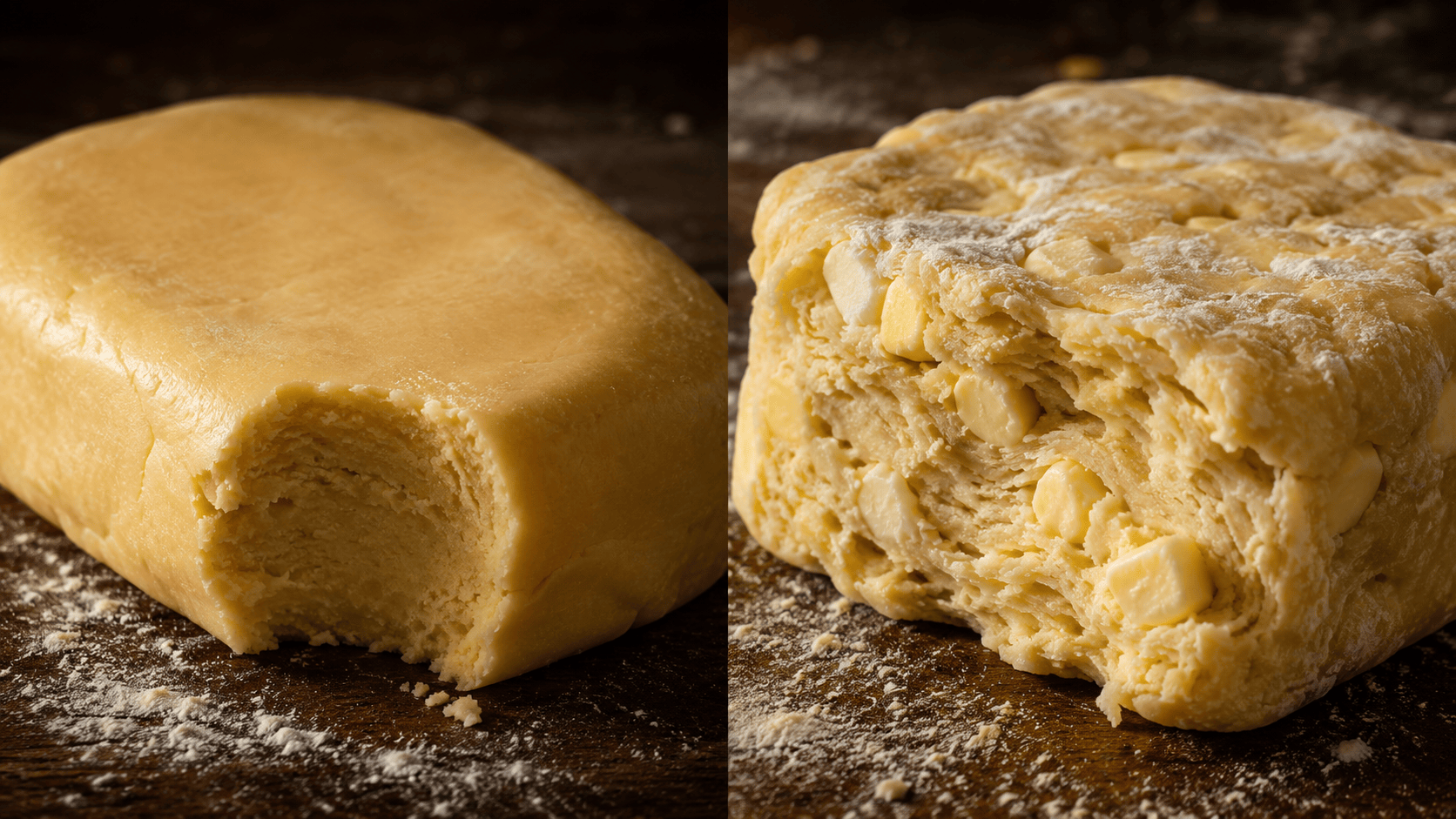
You kept everything cold. Ice water. Chilled bowl. Butter straight from the fridge. Then you worked the dough with warm hands for two minutes too long and the butter melted into the flour before it ever hit the oven.
The result was a pie crust that baked up dense and greasy. It tasted fine. But there were no flakes. No layers. The butter was cold going in but warm coming together. Here’s why that matters.
How Flakes Actually Form
Flaky pastry is a steam-powered structure. Here’s how it works.
When you cut cold butter into flour, you create hundreds of small butter chunks suspended in a flour-and-water matrix. The butter pieces vary in size from coarse crumbs to flat dime-sized sheets. Those sheets are the key.
In the oven, the butter melts. Water in the butter and in the dough turns to steam. That steam pushes up against the surrounding dough. Where a butter sheet used to be, there’s now an empty pocket held open by steam pressure. The dough around it sets and hardens. When the steam escapes, the pocket stays behind.
That pocket is a flake. A hundred butter sheets make a hundred flakes. Melted butter makes zero.
Why Warm Butter Ruins Everything
Butter is about 80% fat and 15% water. The fat is solid below room temperature and liquid above it. When butter melts into the flour before baking, the fat coats every flour particle. The flour can’t absorb water properly. The water that would have turned to steam is trapped in a greasy matrix with nowhere to go.
Instead of steam pockets, you get a dense, shortbread-like texture. Tasty, but not flaky. The butter has to remain in discrete pieces that melt only in the oven, not during mixing.
The Temperature Rule
The rule is simple. The butter should be cold enough to hold its shape when you press it between your fingers. Visible butter pieces in the raw dough are exactly what you want. They will not melt during mixing if you work fast, and they will create steam pockets in the oven.
If the dough feels greasy or the butter has disappeared into the flour, the crust is already compromised. Refrigerate the dough for 30 minutes before rolling. This firms up any butter that softened during mixing and gives the flour time to hydrate.
The Fix for Flaky Crust
1. Start with frozen butter. Grate it on a box grater. The shreds distribute faster with less handling.
2. Use ice water. Add it a tablespoon at a time. The dough should just hold together when squeezed.
3. Work fast. Touch less. Warm hands are the enemy. Use a pastry cutter or food processor. If using your hands, hold the butter chunks with your fingertips, not your palms.
4. Visible butter pieces are good. Pea-sized and dime-sized chunks in the raw dough are your flakes in waiting.
5. Chill the shaped dough. Thirty minutes in the fridge before the oven. This is non-negotiable.
Your Flaky Pastry Checklist
- ☐ Frozen butter, grated
- ☐ Ice water by the tablespoon
- ☐ Work fast, touch less
- ☐ Visible butter pieces = future flakes
- ☐ Chill 30 minutes before baking
Flakes are steam pockets. Steam pockets need solid butter that melts in the oven, not on the counter.